Feature

The Lo-Down

It started with a simple idea: Create a magazine worthy of the community it calls home. Five years later, that idea belongs to all of us.

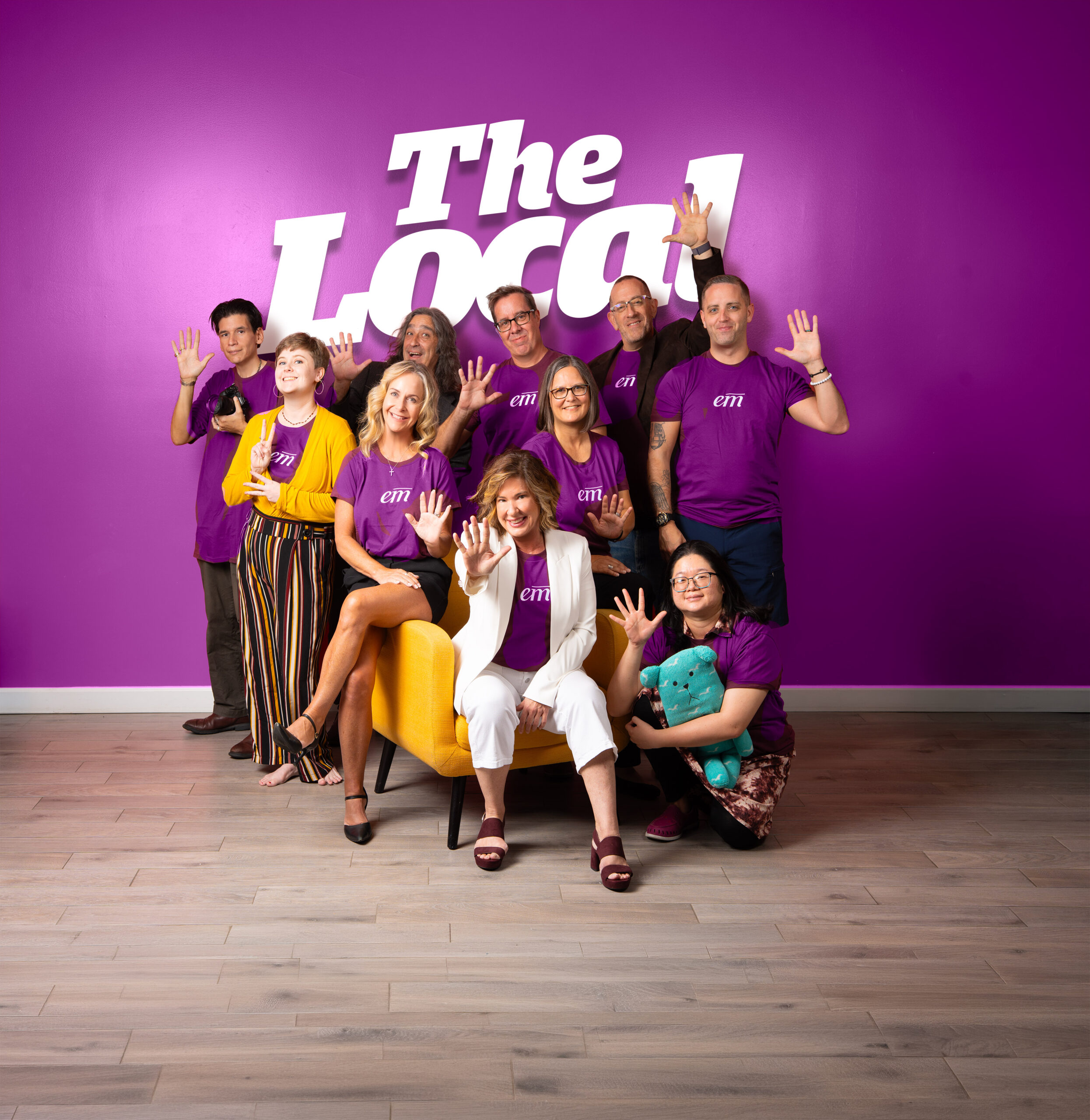
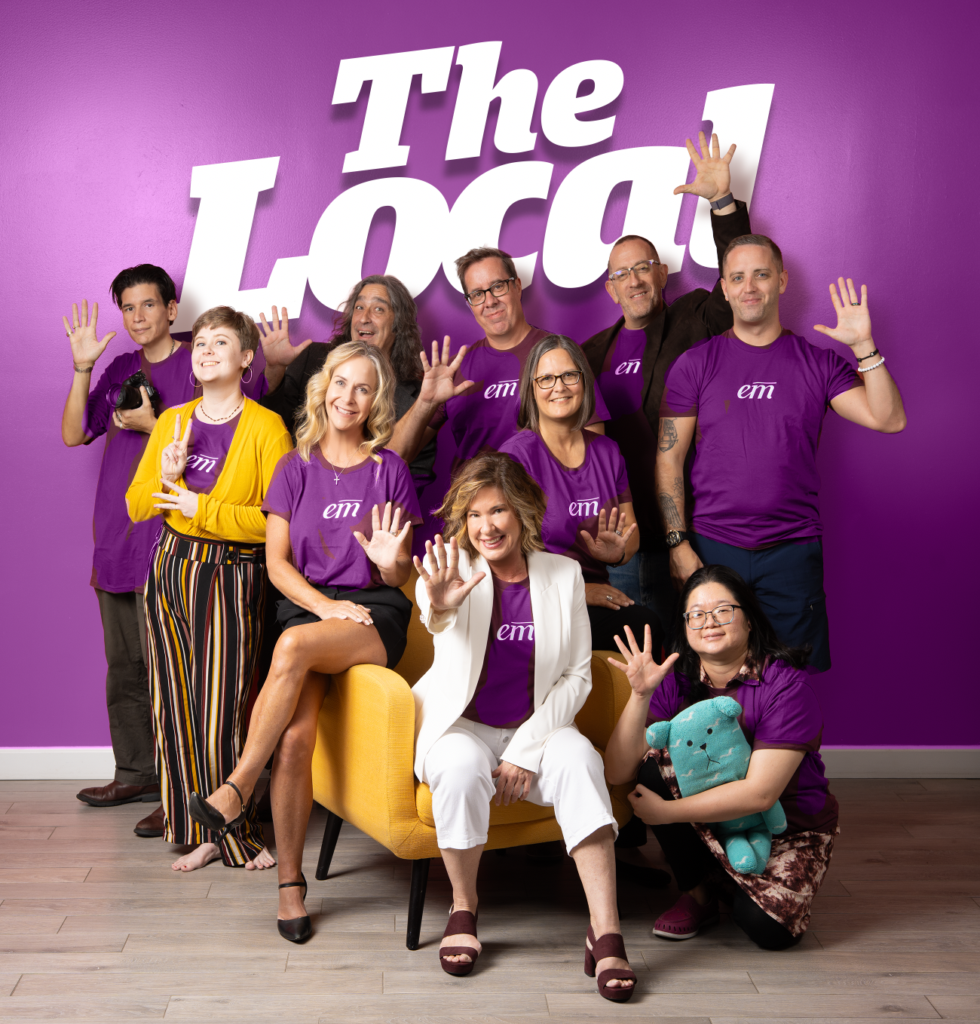
(From left) back row: Fred Lopez, Josh Clark, Andrew Ontko, Jamie Mark

Middle row: Rheya Tanner Cole, Sarah Noboa, Shelly Mark, Evan Miklosey

Front row: Heather Anne Lee, Wendy Mak Toothman

Five years have a way of putting things into perspective.

When the first issue of The Local arrived on magazine racks in 2021, no one knew whether it would still be here half a decade later. There were no guarantees that readers would want long-form storytelling in an increasingly digital world or that local businesses would continue investing in a publication whose greatest purpose couldn’t always be measured in clicks, impressions, or analytics.

Today, some of those questions have been answered.

Readers have embraced the magazine in ways the team never imagined. Tens of thousands of issues are distributed throughout West Orange and South Lake, often disappearing from racks within days. Story ideas are shared almost daily. Families save issues featuring loved ones. Businesses proudly display framed articles in their offices. Former residents subscribe from across the country because these pages help them remain connected to the place they still consider home.

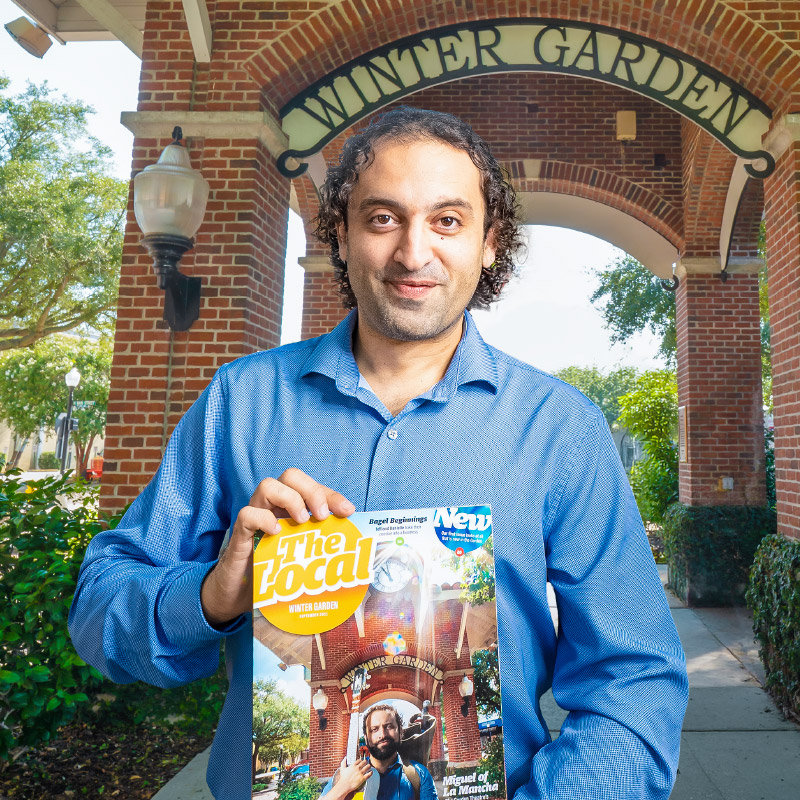
For publisher Jamie Mark, however, those numbers have never been the real measure of success. He instead compares it to Winter Garden’s clock tower. “It’s not something the community needs,” he says. “The town would be the same without it. But as a symbol we all feel connected to, it’s part of what makes this place feel like home.”

The magazine helps foster a connection. It reminds readers to celebrate the restaurant owner who took a chance, the teacher who stayed late, the volunteer who quietly changed lives, and the entrepreneur who opened a business with more determination than certainty.

Those stories have always belonged to the community. So has the magazine. “This is not ‘our’ magazine,” Jamie says, adamantly. “This magazine belongs to the entire community. We just have the privilege of getting to produce it.”

Five years later, it’s easy to look at the empty racks, framed stories, and readers waiting for the next issue and assume The Local was always going to work.

But there was no grand plan, no guarantee, and certainly no shortage of reasons why launching a print magazine in 2021 might be a terrible idea. There was simply a publisher who believed in what a community magazine could become, a team willing to believe with him, and a town full of stories waiting to be told.

So how did The Local get from an idea to the magazine you’re holding now? That story begins eight years before the first issue ever went to press, on the streets of downtown Winter Garden.
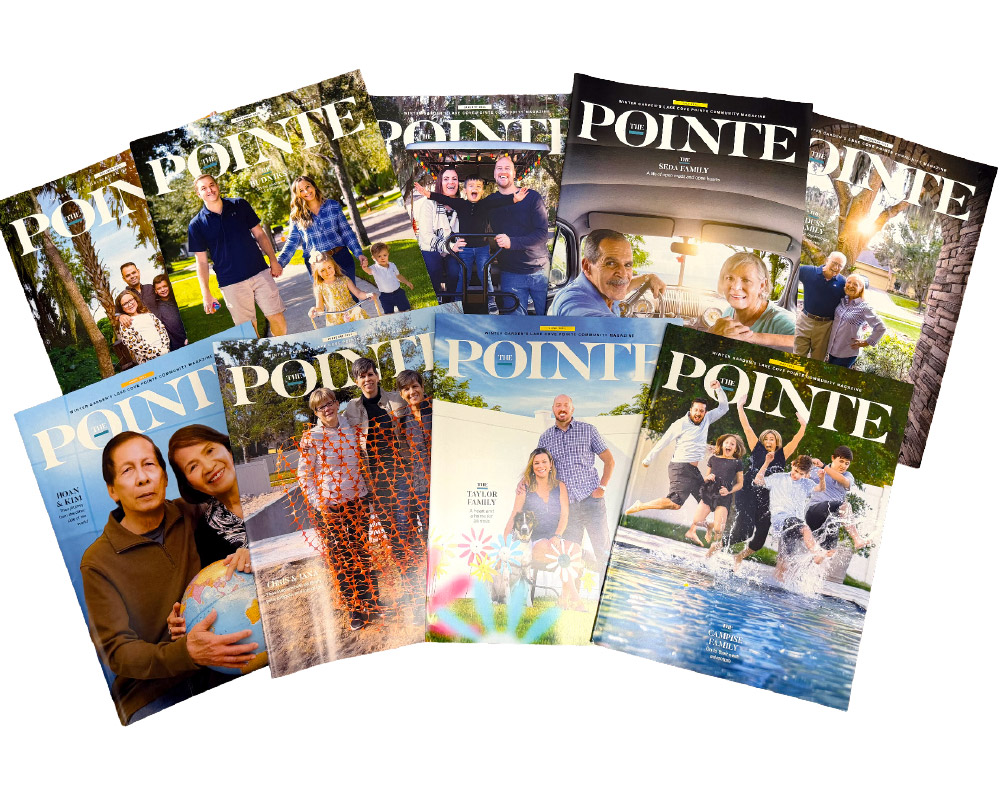
 

Before The Local, there was The Pointe. Created for the Lake Cove Pointe neighborhood, the small magazine tested an idea, sparked conversations between neighbors, and ultimately set the stage for the community magazine you’re holding.

Before The Local, there was The Pointe. Created for the Lake Cove Pointe neighborhood, the small magazine tested an idea, sparked conversations between neighbors, and ultimately set the stage for the community magazine you’re holding.


In the Beginning

On any given Saturday morning, downtown Winter Garden feels exactly the way a hometown should. The aroma of fresh coffee drifts through Plant Street as farmers unload just-picked produce beneath white tents. Musicians compete with the laughter of children on the splash pad. Friends linger outside cafés long after breakfast has ended, while business owners greet familiar faces from their doorways.

When Jamie and Shelly Mark moved here in 2013, they quickly fell in love with that small-town rhythm. Nestled within one of the fastest-growing metropolitan areas in the country was a community where people still knew their neighbors, remembered the crossing guard’s name, and planned Saturday mornings around the Farmers Market instead of errands.

But to Jamie, who had spent his career living and designing magazines in cities of all sizes across the South, something was missing: Where is the magazine? “This area hadn’t experienced the value a real community magazine brings to the area it serves.”

How can you tell if a community magazine is “real”? Its pages aren’t filled with nothing but ads or coupons. It’s not a franchised publication produced in a different state. Its producers treat each issue as a community service, not as a product to sell to a market. It takes the time to tell the stories behind the storefronts and give neighbors a reason to care about one another.

For years, he waited for some other company to swoop in and build it. Eventually, the question changed from, “Why doesn’t Winter Garden have a magazine like this?” to “Why not build it ourselves?”

Before that could happen, an opportunity arrived much closer to home. When Jamie’s neighborhood HOA asked him to help build a neighborhood newsletter, he saw an opportunity to try something greater: What if, instead of another newsletter, Lake Cove Pointe had a thoughtfully written, beautifully designed magazine about the people living around them?


“The Local is a shining beacon capturing the soul, pulse, and culture of what makes this a desirable place to live, work, and play. Their stories showcase heartwarming moments with vivid imagery and affirm our rooted sense of community. We are proud to call them a neighbor.”

—Marc O. Hutchinson, Economic Development Director City of Winter Garden

In that moment, The Pointe was born. He didn’t know it then, but the little neighborhood magazine would become the blueprint for something much bigger.

Realizing the Vision

The proof came on walks with Blue. As Jamie and Shelly made their way through the neighborhood with their hound-mix, neighbors constantly stopped them to ask about the “next issue.” They talked about families they had discovered in its pages. They suggested neighbors who should be featured next.

People who lived on the same street for years suddenly wanted to learn a little more about one another. “We knew within the first couple of issues it was going to work,” Jamie recalls. “The whole idea was helping neighbors get to know each other.”

If a magazine could do that within a neighborhood-sized community, what might it do for a city-sized one?

Before the first issue of The Local was designed, Jamie began asking. An advisory board of local residents helped shape the magazine. Conversations unfolded around restaurant tables, coffee shops, and neighborhood hangouts. The question wasn’t what kind of magazine Jamie wanted to publish. It was what kind of magazine Winter Garden wanted to read.

The answers were remarkably consistent: Tell the stories no one else is telling. Celebrate the people who make this place what it is. Create something beautiful enough to leave on the coffee table, and interesting and relevant enough to want to read again.

The idea had been tested. The community had helped shape it. Jamie knew people wanted it, and he knew he and his team could make it.

Now came the considerably less romantic question: Who was going to pay for it?

Leaps of Faith

Launching a magazine has never been inexpensive. Every issue requires writers, photographers, designers, editors, printing, and distribution long before a reader turns the first page.

In 2021, asking businesses to invest in print felt particularly bold. The world was still finding its footing after the pandemic. Marketing budgets were tight, and every conversation about publishing centered on digital growth, social media, and the decline of print.

Jamie understood the skepticism. “I wasn’t asking people to buy ads,” he says. “I was asking them to believe in a vision.”

Fortunately, a handful of people did. They were investing in little more than conversations, page mockups, and Jamie’s conviction. And yet, Jamie says, “their confidence is what made the first issue possible. It also established a partnership that continues to make every other issue possible today.”

“We appreciate The Local telling the story of the great businesses and recreational amenities in South Lake County. This magazine is a wonderful community partner!”

—David B. Colby, President & CEO, South Lake Chamber of Commerce

The same leap of faith was happening behind the pages. Art Director Rheya Tanner helped establish the magazine’s visual identity while penning a monthly humor column that became one of its most read. Writers Mark McWaters, Tarin Scarbrough, and Nicole Soulsby helped shape its early editorial voice, while artists Josh Clark and Wendy Mak Toothman brought personality to its pages.

Heather Lee joined after the sixth issue, bringing a refined instinct for finding the story beneath the story. By year two, graphic designer Andrew Ontko had joined Rheya in shaping each issue, while web developer Evan Miklosey was building a digital home for its stories. Different talents, one shared purpose: create something worthy of the people who invited it into their homes.

The team could make a beautiful magazine. Whether people would trust them with their stories was another question entirely.

“The challenge in the beginning was establishing trust,” Jamie says. “People didn’t know who we were yet. They didn’t know how we were going to tell their story.”

That trust was earned issue by issue. Sometimes the stories were joyful. A dream business opening its doors. A teacher changing lives. A local artist finding an audience. Sometimes they were heartbreaking, asking readers to sit with grief, resilience, illness, or loss. Those were often the hardest interviews to conduct, but they also became some of the most meaningful. Time and again, readers reached out not simply to compliment the writing, but because they saw themselves in someone else’s experience. They wanted to volunteer, offer support, or simply say, “Me too.”

Other stories asked readers to set aside assumptions. Occasionally, a profile or headline sparked spirited conversation, not because The Local chased controversy, but because it approached its subjects with curiosity rather than judgment. The goal was never to publish safe stories. It was to publish thoughtful ones.

“We’re here to celebrate people’s victories,” Jamie says. “We’re also here to bear witness to their struggles.”

Future Investments

Five years and hundreds of stories later, the question is no longer whether readers will embrace The Local. The empty racks have answered that. The question now is what it will take to keep it here.

In some ways, that answer hasn’t changed since its first issue. The Local may belong to the community, but belonging and sustaining are two different things. Readers give the magazine purpose. Local businesses give it the resources to keep telling their stories.

A community magazine is unlike almost any other business. Readers don’t purchase it at a newsstand. Its value is returned in a different way, through the local businesses that choose to support it and the readers who choose to support those businesses in return.

Today, The Local no longer has to prove that people want it. But Jamie is candid about what the next five years require.

“We’ve changed hearts and minds in a lot of ways,” he says. “We’ve become part of this community. That’s wonderful. But we still need the support of the business community because that’s what allows us to keep doing this.”

Supporting The Local doesn’t simply mean picking up a copy each month (although we hope you’ll continue doing that). It means sharing story ideas about the remarkable people who deserve to be known. It means introducing the magazine to a friend who has never read it. And when the opportunity arises, it means choosing the businesses whose investment keeps these stories in print.

From the beginning, Jamie resisted the idea that advertisements were interruptions between stories. They were, and continue to be, part of the story. The businesses filling these pages are the same ones sponsoring Little League teams, supporting school fundraisers, serving on nonprofit boards, and investing in the quality of life that makes Winter Garden feel like home.

So, for local business owners, the invitation is equally simple: If you believe there is value in a community magazine, be a part of it.

Five years ago, Jamie set out to create the magazine Winter Garden deserved.

Looking back, he realizes the community created something even better. Not because of the people whose names appear on the masthead, but because of the thousands of readers who welcomed The Local into their homes, the businesses that believed in its mission, and the remarkable people who trusted it with their stories.

And if the last five years have proven anything, it’s that a community willing to celebrate one another is also a community worth investing in.

Here’s to the next chapter.

“The Local tells the stories behind the stories, highlighting the people, passion, and purpose that make this such a special place. By connecting and celebrating our community, it helps tell the story of why this is one of the best places to live, work, and do business.”

—Stephen Lewis, CAE, President & CEO West Orange Chamber of Commerce

Our First Editor, Nicole Soulsby

Nicole Soulsby has a thing for people. Interesting people. Unexpected people. The kind who make her lean in and ask one more question.

As The Local’s first editor, Nicole helped shape a magazine by doing exactly that: asking questions, getting to know people, and becoming part of the community. When Walt Disney World called her back in 2022, the scale changed considerably. The curiosity didn’t.

Today, Nicole is a senior event manager working with Disney’s public relations and public affairs teams, helping bring major launches and experiences to life, from new attractions and cruise ships to Banana Ball. But one project became what her son jokingly calls her “opus”: Tiana’s Bayou Adventure.

The project took Nicole repeatedly to New Orleans, where she built lasting relationships with the family of Leah Chase, the legendary restaurateur who helped inspire Princess Tiana. For Nicole, those connections are the best part of the job. “Who am I going to get to meet next?” she says. “What story am I going to get to hear?”

Off the clock, Nicole jokes that she’s not an empty nester, she’s a “bird launcher.” One son has graduated college and is considering grad school. Her youngest is a high school senior touring colleges. Next year, she and her husband celebrate 30 years of marriage.

Through it all, Winter Garden remains home. Nicole still runs into people she met while editing these pages and still loves an early Saturday morning before the crowds arrive. For someone who makes a living creating big moments, she doesn’t need much spectacle at home. Give her Winter Garden, her family, a good book, and a cup of tea, and that’s plenty.
Leave a Reply

Your email address will not be published. Required fields are marked *

More Articles

Feature

It started with a simple idea: Create a magazine worthy of the community it calls home. Five years later, that idea belongs to all of us.

Feature

Five years. Hundreds of stories. Feels like the perfect time to revisit a few of your favorites. See where life took them after the last page turned.

Promotional Feature

Exclusive Med Aesthetics personalized care goes beyond skin deep and is inspired by an experience that hits close to home.