

Feature
Living Smart
Inside Alleia White’s smart home, where technology hums quietly beneath healing, family, and a fresh start.
- heather anne lee
- Fred Lopez
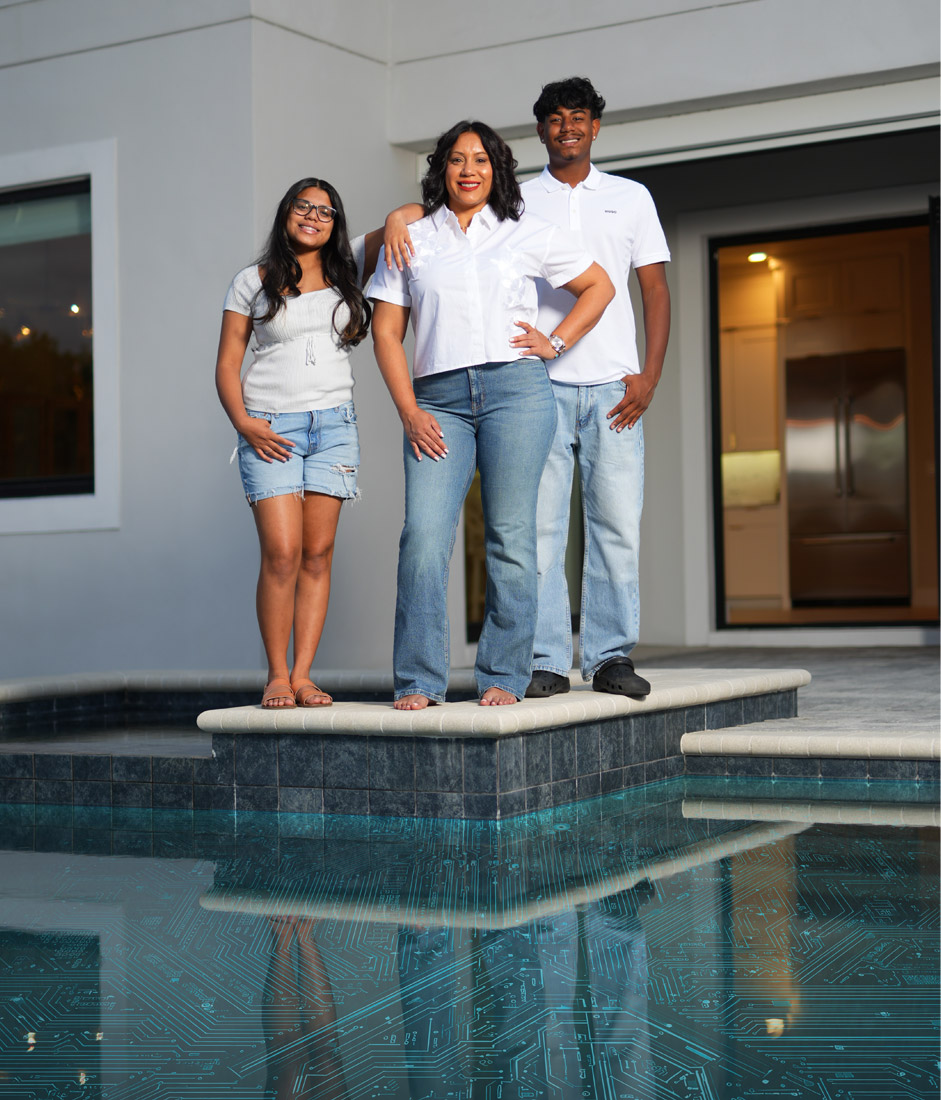
You expect to notice the technology in a smart home. The lighting scenes. The hidden speakers. The whisper-quiet automation.
But when Alleia White first walked through the front door, it was the scent that stopped her.
“It hit me immediately,” she says, laughing. “Like that Tom and Jerry cartoon where he smells the cheese and just floats through the air.” Later she learned the high capacity scent diffusers had a name, Ritz-Carlton, but in that moment it felt less like luxury and more like fate. Familiar. Comforting. A soft place to land after a hard season.
Only later did she notice how seamlessly the house delivered something else she had quietly hoped for all along. Lights adjusted without glare. Music followed her from room to room. More than a dozen cameras, smart locks, and layered security worked in the background, offering a kind of invisible reassurance every parent understands.
The technology didn’t announce itself. It didn’t flash or beep or demand attention. It simply supported the life she was trying to build — calm, safe, steady.
Because this wasn’t just another property. Alleia has flipped homes before: taken them down to the studs, made them beautiful, let them go. But this move followed a finalized divorce, and with it came a quiet promise: the next house wouldn’t just look right. It had to feel right. Especially for her kids.
In fact, she doesn’t really describe the house as hers.
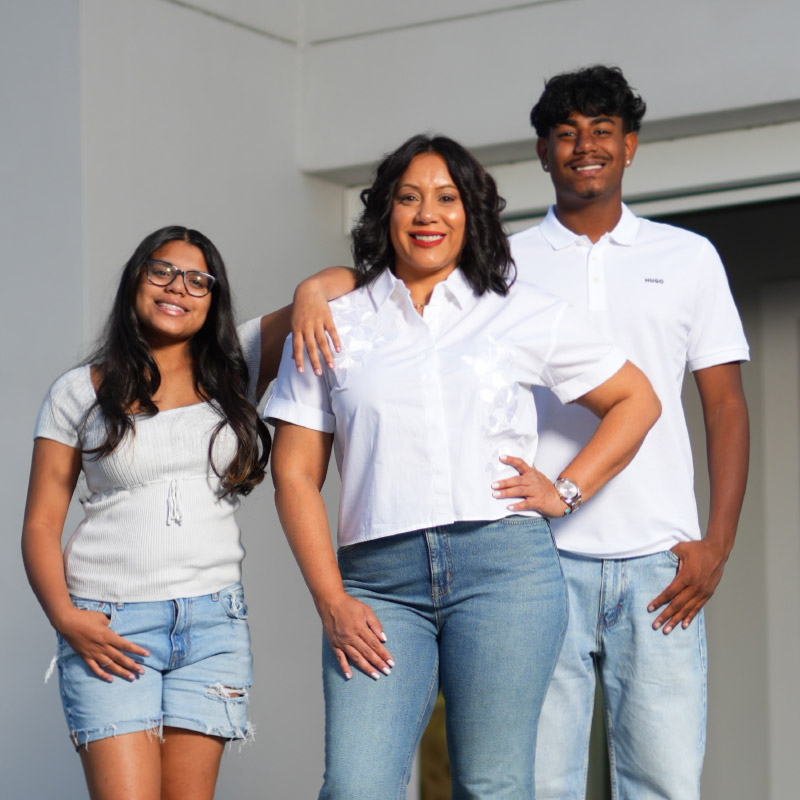
“It’s my kids’ house. I just clean it and cook in it,” she says with a smile.
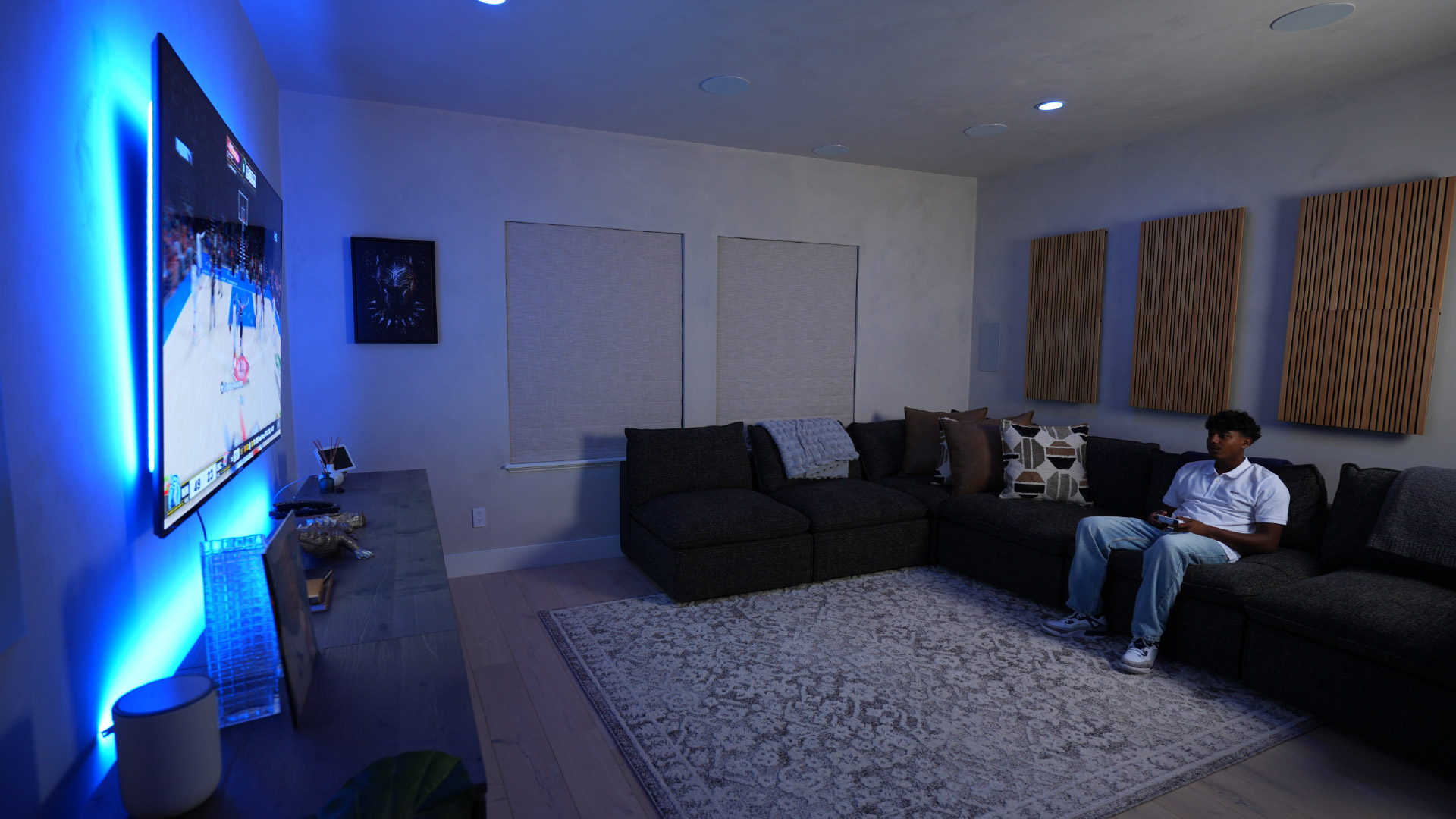
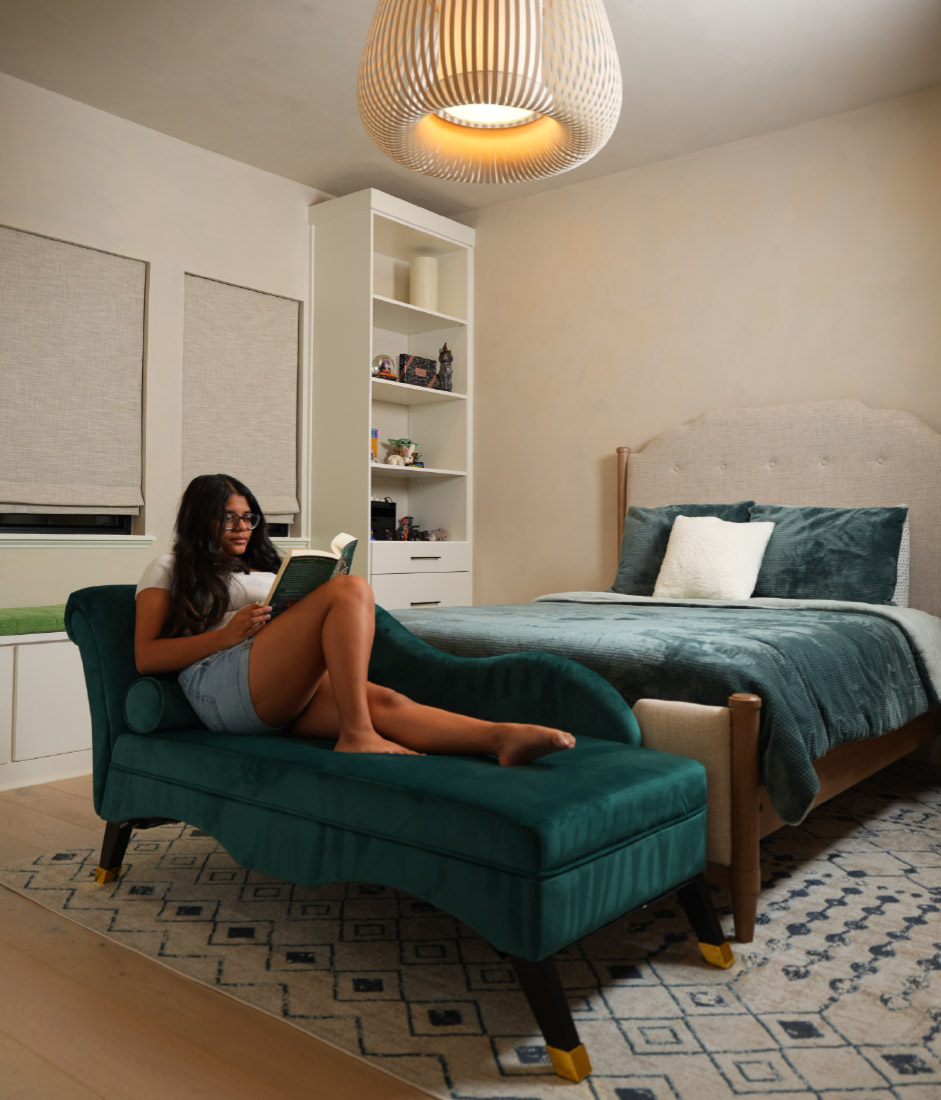
She means it in that tender, half-joking way mothers do when they’re pouring their whole hearts into a time they know won’t last forever. Her daughter, a devoted reader who can devour a Harry Potter book in a day, now has built-in bookcases that feel custom-made for her. Her son claimed the loft, where a gaming setup and layered sound system have turned the space into his personal headquarters.
“I made sure their bedrooms felt like sanctuaries,” Alleia says. “I wanted them to have something I never had growing up—their own space that felt special.”
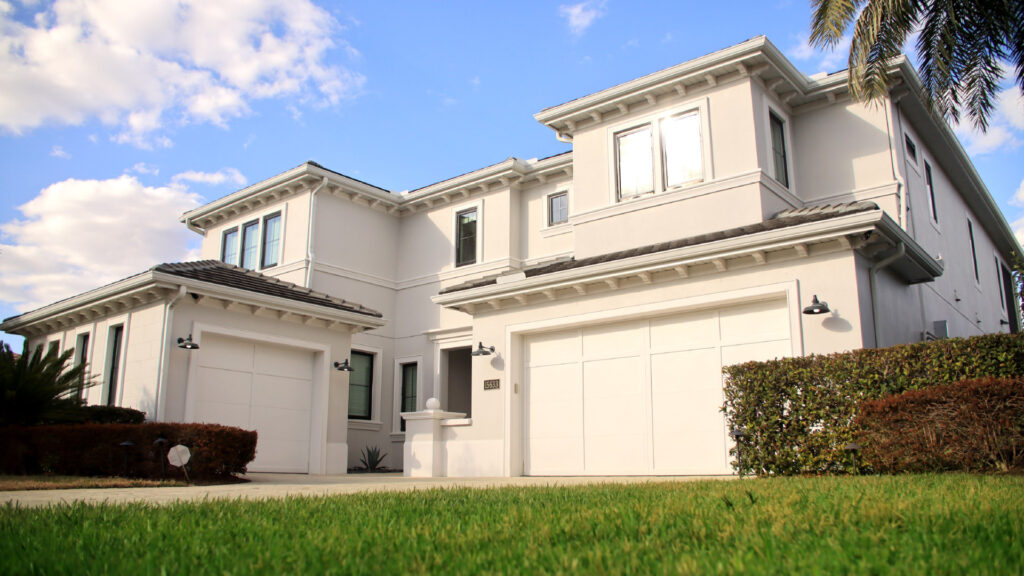
This house, almost eerily, already understood the assignment. The scale of the rooms. The sense of privacy. The way each space feels like its own little world. It was all there, waiting.
Where Intelligence Lives Quietly
Beneath the calm, layered textures and hand-finished walls runs a nervous system worthy of a tech campus. The previous owner built a dedicated home network, complete with a server closet that quietly powers everything from lighting scenes to music zones to discreet security cameras you’d never notice unless someone pointed them out.
However, when Alleia bought the home, none of it worked.
“That’s actually how we met,” says Bryan Satmary, founder of Above & Beyond AV, the smart home specialist she called in to untangle the system. “She had all this technology, but it wasn’t functioning. We went in, reorganized everything, rebuilt the programming, and made the house behave the way it was always supposed to.”
Behind the walls is a professionally designed Control4 automation system—the kind more often found in custom builds than resale homes. Every light switch is smart. Every Sonos speaker is integrated. Cameras, thermostats, motorized shades, patio screens, pool controls, and even the color of the lighting can be adjusted from a single app or wall keypad.
Central to that overhaul is a dedicated equipment rack—essentially the brain of the house—tucked away in its own ventilated space.
“With systems like this, you want everything in one organized location,” Bryan explains. “It keeps wiring clean, reduces heat and noise in living areas, and lets us service or update the system without tearing into walls or closets. It’s the difference between a professional-grade smart home and a bunch of gadgets plugged in randomly.”
The internet, too, is engineered differently. Instead of relying on a single router, the home uses strategically placed, hardwired wireless access points that create seamless coverage from room to room and out to the backyard. You can walk the length of the house on a video call without a hiccup.
That kind of seamlessness matters here, because for Alleia, music is not an afterthought. It’s daily atmosphere. A must-have, not a bonus feature.
Music doesn’t just play here, it travels. The system is calibrated so audio moves cleanly from room to room without echo or delay, creating flow instead of noise. Outside, speakers disappear into landscaping by the lakefront pool and lawn, each zone tuned so Mozart in the kitchen doesn’t compete with teenage party anthems by the water.
With a tap of a customized button, Alleia can cue music, shift the mood lighting, or activate a “home” scene that gently brings the house to life when she walks in the door.
But what the technology really delivers is predictability. Doors lock automatically at night. Path lights glow softly if someone gets up after midnight. Shades lower at sunset. A single “Goodnight” command can turn off lights, arm security, and adjust the temperature in seconds.
“It’s about making the house work for you without you thinking about it,” Bryan says. “The best smart homes feel simple.”
It’s a house that quietly handles the background so Alleia can focus on the foreground—raising two teenagers in a demanding chapter of life.
Each morning, before checking her phone, she steps onto her bedroom balcony as sunlight spills over the water. It’s a ritual she learned during a wellness retreat in Arizona: face the sun, be still, let the day arrive gently.
“It sounds small,” she says softly, “but it’s healing.”
And maybe that’s the real genius of this house. For all its intelligence, it never competes for attention. It supports. It softens. It disappears when it should.
Texture, Light, and the Art of Restraint
If the wiring is modern, the surfaces are timeless.
Nearly every wall is limewashed, a finish that feels at once ancient and utterly current. It softens daylight, adds depth, and refuses to repeat itself. As the automated shades rise and fall throughout the day, the walls shift from chalky and matte in the morning to softly luminous by evening—proof that even the smartest homes still rely on old-world materials to feel human.
“The painter called it imperfectly perfect,” Alleia says, running her hand along the wall.
The staircase, one of her favorite features, turns that philosophy into sculpture. The limewash catches light differently at every hour, transforming with the sun’s angle. No two views are the same. It’s the kind of detail you don’t photograph once—you circle it, trying to understand how something so subtle can change an entire mood.
The kitchen follows the same code of restraint. A classic double-stacked island anchors the room. JennAir appliances, including a five-burner gas range, blend into cabinetry instead of shouting for attention. Whitewashed wood floors stretch underfoot, warm and beachy without trying too hard. Sculptural light fixtures hover overhead, dramatic, but deliberate.
And then there are the wine cabinets. “There are so many,” Alleia laughs. “I don’t drink that much wine!”
Now they hold sparkling water and soda as often as Cabernet. For entertaining, they’re genius: guests can help themselves without drifting into the pantry or opening the family fridge. Hospitality, with boundaries—a modern art form.
Yet, for all its polish, this is not a precious house. It’s a lived-in one.
Alleia gravitates toward understated design with a distinctly West Coast sensibility. The space relies on light, proportion, and texture rather than ornament. Patinaed finishes, whitewashed wood, and European influences bring character while preserving a sense of calm. She had hoped for a 10-foot concrete dining table, but, “My kids were like, No, Mom,” she laughs.
So the house lands in that sweet spot between elevated and livable. Yes, there’s light-toned fabric furniture. Yes, there are teens. Yes, everyone is surviving.
Upstairs, the design bends to personality. Her son’s loft is less bedroom, more immersive command center. At night, he lowers the shades, sets the lights to blue, and disappears into a cocoon of sound and screen glow. Her daughter’s room tells a quieter story. Built-in bookcases stretch along the wall, slowly filling with well-loved spines. She prefers a proper light fixture over a ceiling fan. Glass shower doors instead of a curtain. She knows what she likes—and here, that carries weight.
Elsewhere, the design nods to the places that shaped Alleia. In her son’s bathroom, glossy tile and graphic lines wink at New York City subway stations, a subtle reference to her roots. Throughout the rest of the home, the mood shifts Mediterranean: rustic textures, weathered finishes, walls that look kissed by time instead of installed last year.
Her bedroom suite is the softest expression of all. Brushed gold tones glow against white and wood, stone and glass. The shower can be digitally programmed, but it’s the harmony of materials that stands out. Even the motorized patio blinds pull double duty, offering blackout shade or sheer drapery effects—beauty and function in quiet partnership.
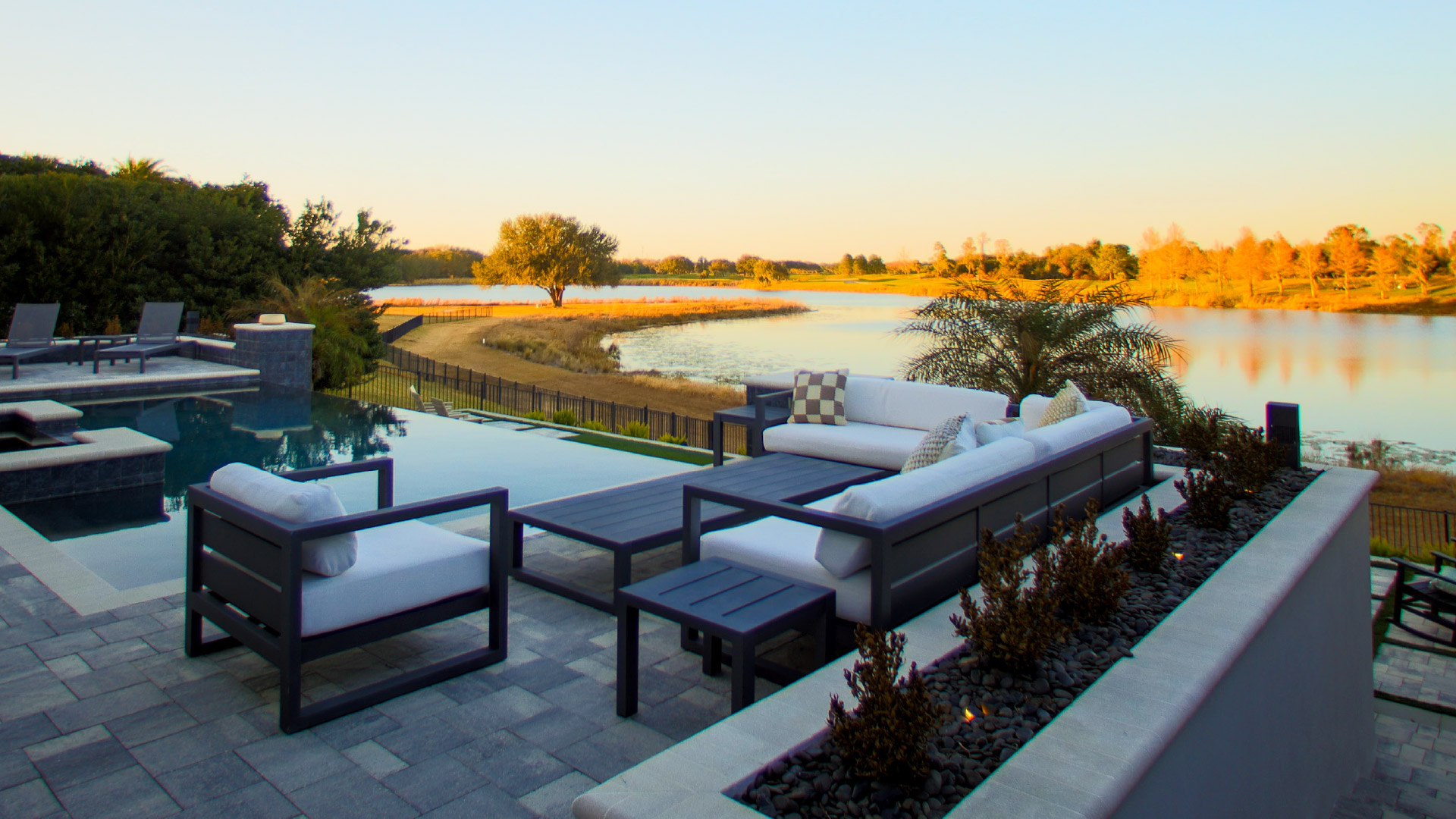
And then there’s the balcony, less a feature than a front-row seat to the life she’s rebuilding. From here, she sees the pool deck where her kids and their friends take over, the path lights glowing along the lawn at dusk, and the lake holding the last light of day. It’s where she watches them grow, louder, taller, and more independent by the week, while standing in the one place designed entirely for stillness.
Below, the backyard tells a different story. This is where the kids wrestle, host friends, turn the volume up. It’s loud. It’s joyful. It’s gloriously unstyled.
Still, it’s a masterclass in smart design. Weather-rated speakers hide in the landscaping. Trim lighting outlines the home in soft color during the holidays. A misting system cools the air and keeps mosquitoes at bay—a Florida luxury that feels almost magical. All of it powered by underground wiring buried deep enough to survive both storms and overzealous landscapers.
“Outdoor systems have to be built tougher,” Bryan says. “It’s not just about sound or lighting, it’s about using the right infrastructure so everything keeps working in Florida conditions.”
All of it, from the wiring to the lighting and durability, serves a larger intention.This isn’t just a smart house. It’s a carefully orchestrated one, designed to hold both energy and exhale. Private rooms perch above social spaces, so late-night gaming or poolside laughter doesn’t bleed into early-morning quiet. It’s zoning not just of sound, but of life stages—retreat above, connection below.
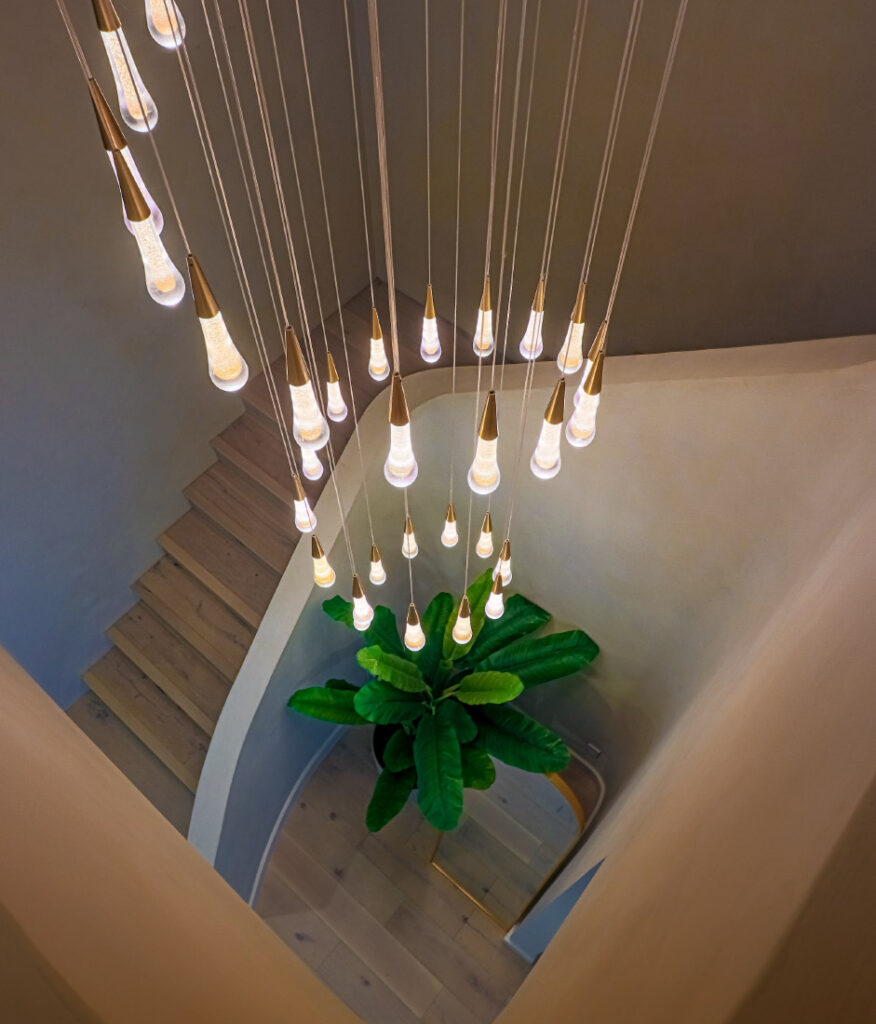
One of Alleia’s favorite features, the staircase turns her aesthetic into sculpture. Limewash catches the light throughout the day, brushed gold warms the wood tones, and a dramatic cascade of pendant bulbs falls like a waterfall from above.
The Woman Behind the Home
The calm authority Alleia brings to her home is the same one she carries into work—though the environments couldn’t feel more different.
Before launching her award-winning trucking company, she spent six years at Apple. Then Amazon recruited her. Eighteen months later, she was given the chance to take full ownership of a trucking business.
“One hundred percent ownership,” she says, still sounding a little amazed. “They said, ‘You’re ready,’ and handed me the keys.”
Today, her company includes around 50 employees, two locations, and a fleet of 30 trucks. Her days are a blur of routes, regulations, driver calls, and split-second decisions that keep freight, and livelihoods, moving across state lines. Logistics is controlled chaos, a constant recalibration when weather shifts, engines fail, or delivery windows tighten.
That high-stakes precision shows up in an unexpected form near the front door. In the foyer, a collection of hand-painted ducks sits like small pieces of art. Very meaningful art.
They trace back to one of the company’s proudest early moments. Representing Amazon at a national trucking competition, her team faced a challenge drivers call the rubber ducky test: maneuvering a massive truck and trailer so precisely that none of the tires touch a small rubber duck placed on the ground, even though the driver cannot see it.
Her team practiced with duckies, invited family and friends to cheer them on, placed fifth in the nation their first year, and claimed first the next. Those ducks—and the miniature versions now riding in trucks and perched on office desks—stand for teamwork, pride, and the exacting precision her industry demands every day. It’s this blend of rigor and intuition that has helped her carve out a place in a heavily male field. “It’s such a man’s world. The funny thing is, they all want to be told what to do,” she says with a smile.
“I made sure their bedrooms felt like sanctuaries,” Alleia says. “I wanted them to have something I never had growing up—their own space that felt special.”
At work, she manages motion. Constant variables. Endless noise.
Home is the opposite.
“My brain is in problem-solving mode from the minute I wake up,” Alleia says. “Walking into a house that already knows what to do feels like a deep breath I don’t have to earn.”
The lighting adjusts on its own. The network hums without intervention. Systems Bryan maintains mean fewer decisions, fewer fires to put out. Here, the complexity is handled quietly in the background.
“The goal,” Bryan says, “is to remove friction. When technology is working right, it gives people back time and mental space.”
Seven months in, Alleia is still discovering what the house can do—how it anticipates, softens, and supports the life unfolding inside it.
But the real transformation isn’t in the wiring or the walls. It’s in the small, ordinary moments now unfolding with a little more ease—a daughter reading late into the night, a son laughing with friends downstairs, a mother standing quietly above it all as evening settles in and the lights flicker on one by one.