


Feature
The Edible Garden
- tarin scarbrough
- Fred Lopez
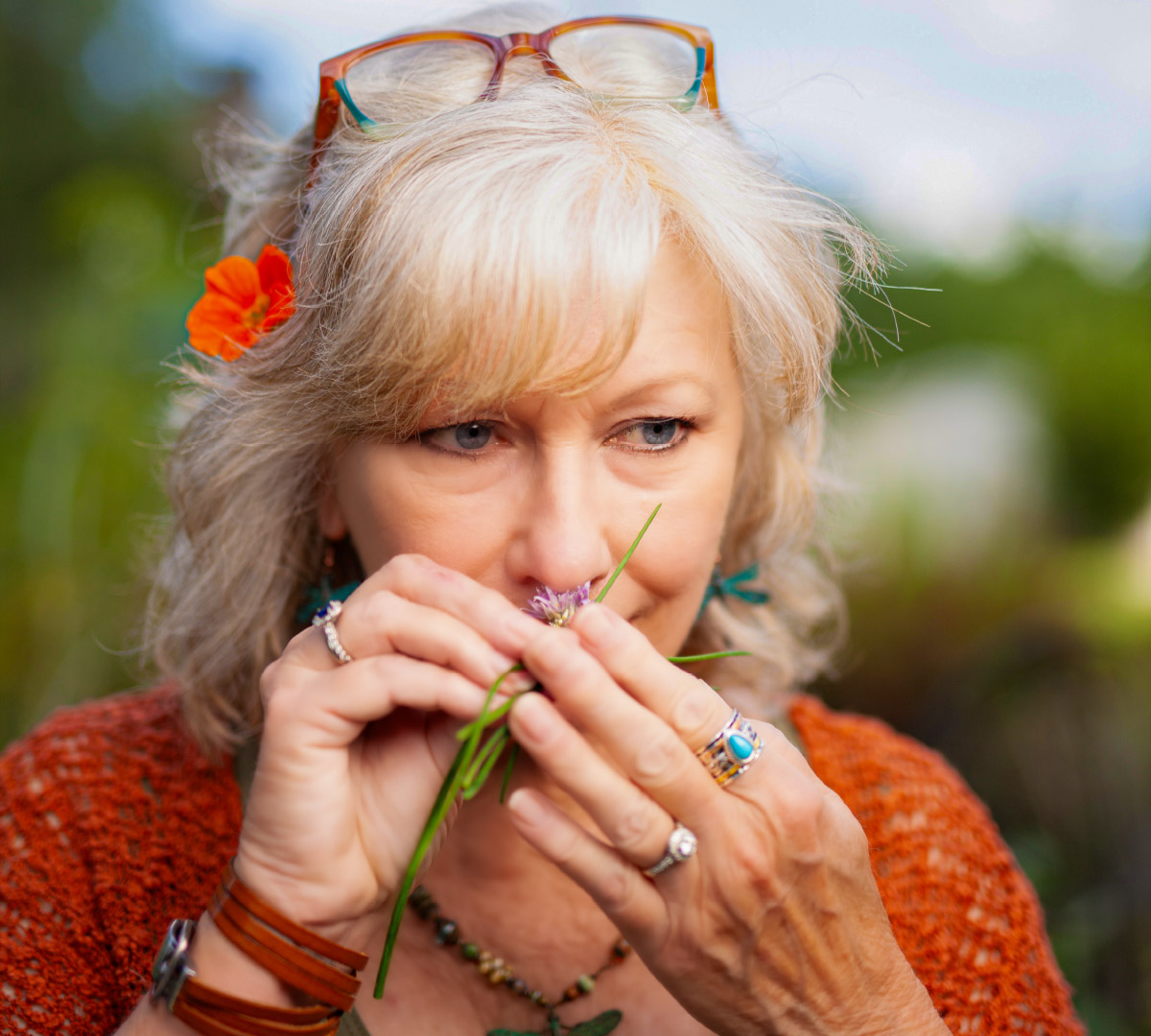
Jackie Hester is the kind of neighbor people notice—not because she’s loud, but because she’s always outside, always tending, always in motion. For months, passersby slow down in front of her house, trying to make sense of what’s growing there. The yard carries a quality that’s hard to name. Not immaculately manicured, not overgrown and wild—just somewhere intentional in between. Hummingbirds hover. Raised beds line the space. Things bloom in saturated, deliberate color, nothing accidental about it.
Curiosity eventually gets the better of most people. Jackie welcomes it.
When Jackie and her husband, Brad, bought the house eight years ago, there was nothing there. The previous owner had wanted it completely bare—no flowers, no plants, no hedges. What they inherited was sand and one dead, leaning palm tree that Brad promptly took down with a chainsaw. Everything that exists now, they built.
The vegetable garden began in 2020. “We didn’t know if we were going to be able to go to the grocery store,” Jackie says. “I started it to release my panic.” She planted straight into the ground at first, unsure if anything would take. It did. And then she wanted more.
She ordered raised beds online. Brad assembled them, then built a retaining wall to keep the mulch from washing out in Florida’s sudden, soaking rains. Jackie comes up with the ideas; Brad executes them. What started as a small, anxious experiment during a global shutdown became, bed by bed, one of the most productive and quietly beautiful small-scale gardens in the neighborhood.
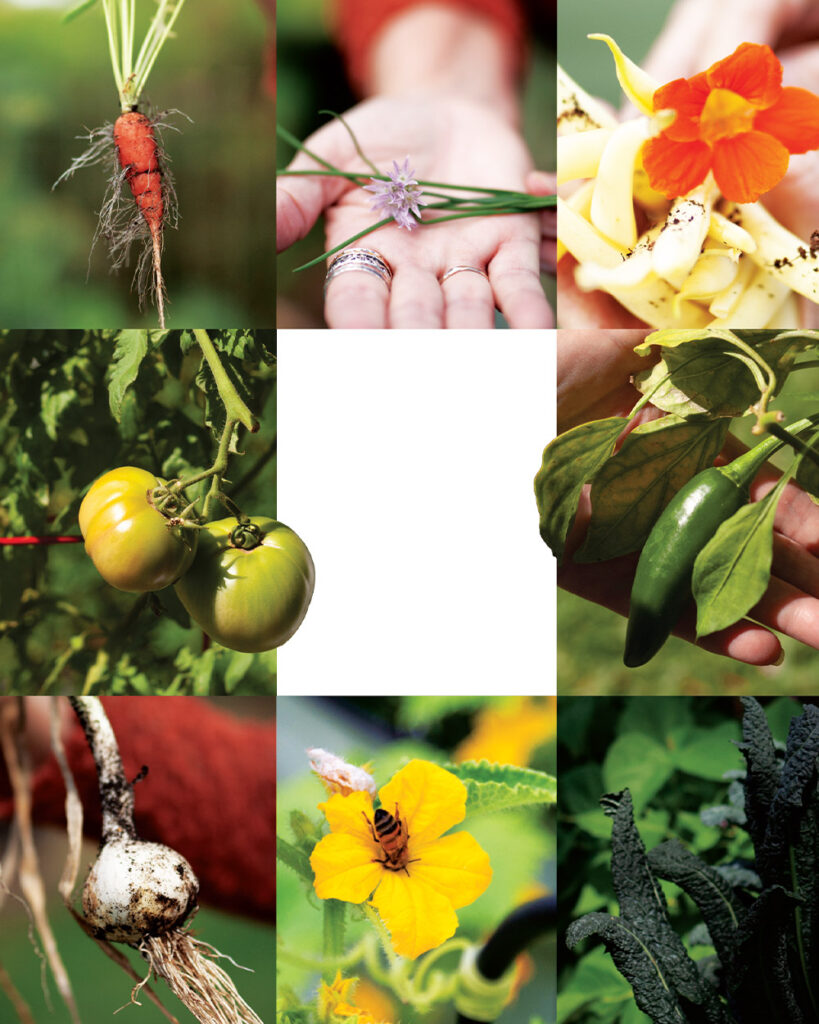
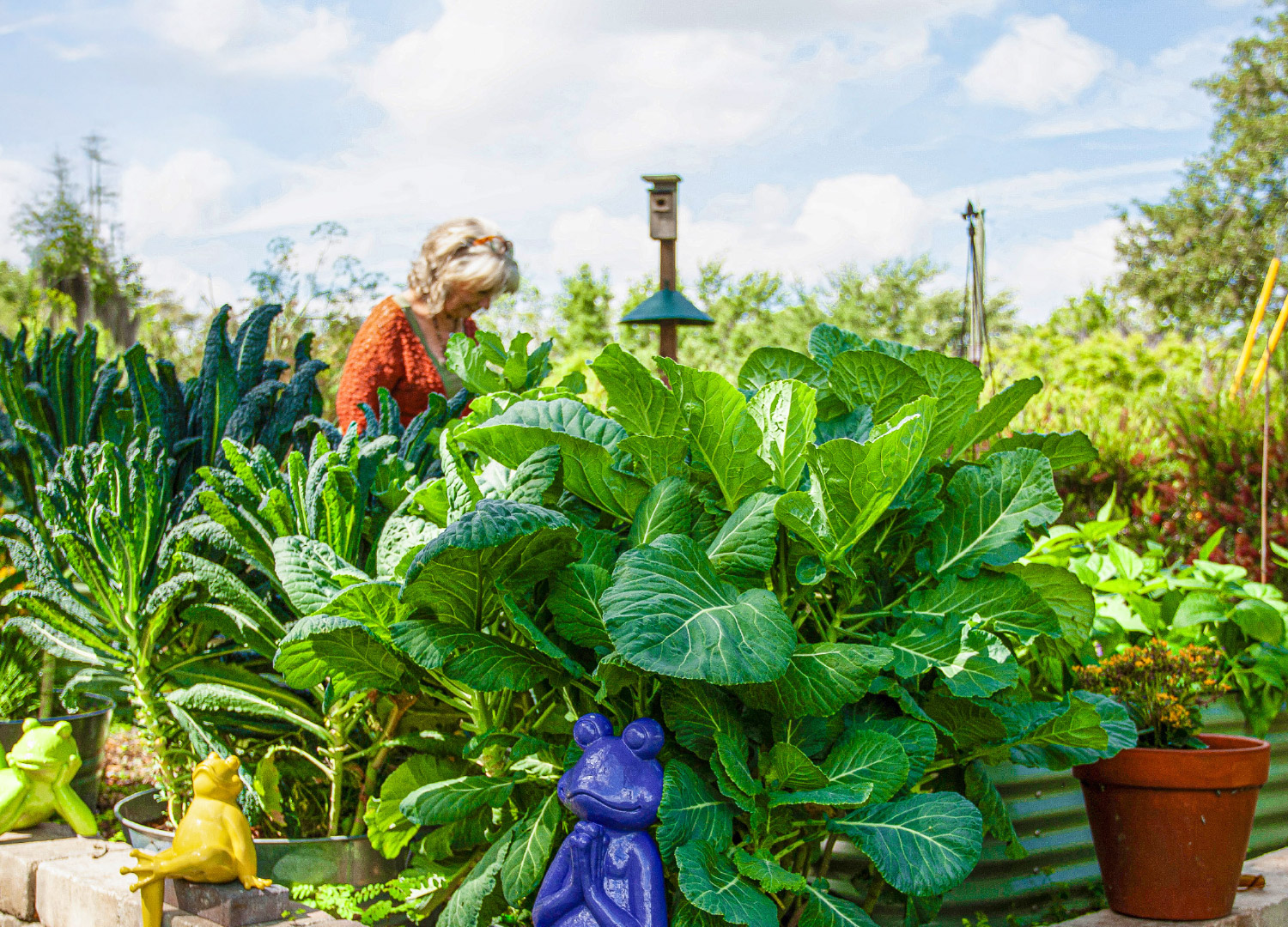
What grows there now is nothing short of impressive. Three varieties of tomatoes, each one earning its place. Three kinds of peppers—serranos, jalapeños, glossy bell peppers. Collard greens and two types of kale, their leaves thick and textured. Wax beans, deep burgundy beans, lima beans, and several varieties of green beans climbing and curling. Crisp cucumbers. Herbs everywhere—fragrant, unruly, thriving.
Jackie starts nearly everything from seed, and on weekends she can often be found wandering the aisles of Ace Hardware. “They love me over there,” she says, laughing. “So much dirt.” It’s not just convenience that keeps her coming back—Ace doesn’t spray their stock, and in a garden this carefully cultivated, that matters.
The couple has built their own irrigation system and learned, through trial and plenty of error, that Florida gardening requires ignoring seed packets entirely. The heat is relentless. The growing season has its own rhythm, its own stubborn logic. You either learn to read it, or you lose your tomatoes every summer.
None of this came from a class or a book. Jackie is entirely self-taught, her classroom a patchwork of gardening pages, Facebook groups, and late-night YouTube rabbit holes. That’s how she learned to keep seed potatoes sprouting in a drawer beneath her dryer, tucked into warmth and darkness until they’re ready. On a recent evening, she pulled the drawer open to reveal small, determined shoots pushing toward life—ready to go in the ground the next morning with help from her grandkids. It’s a detail that captures her perfectly: resourceful, unhurried, using every corner of the house in service of something growing.
The internet also led her to North Spore, a small company whose founders guide growers through cultivating mushrooms from start to finish. Jackie decided she wanted shiitake. Near the fence, a log drilled with precise, methodical holes dries in the sun, waiting for spores. Brad drilled the holes.
Citrus trees sit in large pots on wheels, ready to be rolled into the garage when temperatures dip. Last year, she grew a cantaloupe she describes, with delight, as “extraordinary.” She harvested one out of seven—the worms claimed the rest—but says it tasted like something worth losing six cantaloupes for.
The vegetable garden is what visitors notice first, but it’s not really the point.
Along the fence runs a perennial garden planted specifically for butterflies, hummingbirds, and bees. Parsley and dill grow thick and abundant, intentionally sacrificed to swallowtail caterpillars that will eventually strip them bare. Jackie doesn’t mind. She grows herbs for the insects the same way she grows vegetables for the table—because everyone needs feeding.
In the corner, a nest box holds a pair of bluebirds raising their young. On a recent morning, she heard them—soft, tentative sounds that required complete stillness to catch. A catbird that winters there returned this year with a mate. Hummingbirds work the feeders constantly until the orange trumpet vines bloom open; then, almost overnight, they abandon the feeders entirely.
There are also two cats. Maurice and Venus, feral and jet black, appeared during COVID, living under a neighbor’s shed. Jackie trapped them herself and had them spayed and neutered through the county’s Trap, Neuter, Return program—a process she has repeated eleven times over the years. Most of those cats were released and never seen again. Maurice and Venus stayed. They live somewhere in the garden—unseen but effective. She hasn’t seen a mouse since.

“When I come home, this is where I come. I look at growth. I look at survival.”
Jackie doesn’t buy purses anymore. She doesn’t get her nails done. Instead, she spends on dried mealworms for the bluebirds—$9 a bag, a bag a week. “This is my therapy,” she says. “This is my real joy.”
For the past fifteen years, Jackie has worked in oncology, most recently in breast cancer care. She meets patients at the moment of diagnosis—she’s the one in the room when their lives change. A decade ago, she saw four or five new patients a week. Now it’s four or five a day.
She says this plainly, the way you say something you’ve already made peace with. Then she looks out toward the nest box, where the bluebird parents move in a steady rhythm—back and forth, back and forth.
“When I come home,” she says, “this is where I come. I look at growth. I look at survival.”
A hummingbird hovers at an orange bloom just ten feet away, ignoring the feeder now that the flowers have returned.
Brad joins near the end of the evening, easy and unhurried, the way someone moves through a space they helped build. Jackie tells the story. Brad makes it possible. It feels like the perfect arrangement.
Before a guest leaves, Jackie cuts a bundle of black kale straight from the garden—fresh, dark, still cool from the evening air—and hands it over as if it’s nothing.
Like that’s just what you do when something is ready— you feed someone.
“This is my therapy, This is my real joy.”




3 Responses
As one of Jackie’s neighbors, I can attest to the awesomeness of her green thumb! My husband and I have spent countless evenings with Brad and Jackie in the backyard, sipping a glass of wine, watching over the gardens, enjoying the birds, the cats, and their sweet dog.
Thank you for this terrific article about such a wonderful person. She makes the neighborhood and the world a better place.
ahhh! A lovely garden for lovely people! Beautiful!
What a total delight to read this article highlighting such a beautiful person. Reading “The Edible Garden” brought back an entire season of life I shared with Jackie when our children were young and attending the same school. From the moment we met, I knew I wanted to be her friend. When she later moved into my neighborhood, I welcomed her with a sturdy plant in a blue and white ceramic pot covered in bright yellow lemons because it reminded me of her: vibrant, strong, and full of life. Over the next decade, we spent countless hours talking about parenting, music, home projects, and our shared love of growing things.
While I was still learning to keep impatiens alive, Jackie was creating a backyard sanctuary, adding tall flowering plants for butterflies, feeders for birds and squirrels, and color that felt intentional without disturbing the natural landscape. But what stands out most from those years is her compassion. When my mother was diagnosed with stage four breast cancer, Jackie was the first person I called. She walked with me through every step, supported my mother through treatments, and even helped care for my sick cat. Her kindness and steadiness carried me through one of the hardest chapters of my life.
Although we now live on opposite coasts, I still love watching her world unfold through photos and messages, especially her joy as a grandmother. This article captured exactly who Jackie is: someone who nurtures everything she touches, whether it’s a garden, a patient, a friend, or her own children, who have always been her greatest purpose. The beauty she grows isn’t limited to her yard. It’s who she is. In many ways, Jackie is her own version of Mother Nature; quietly shaping the world around her with care, intention, and heart.